2FIRSTS | Special Report | How Capital Is Reassessing the Global Tobacco and Modern Nicotine Industry: Lessons from a New York Forum
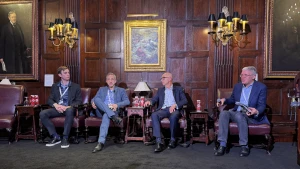
 At a New York forum, analysts said capital is revaluing tobacco as heated tobacco, vaping and pouches scale up.
Summary
At the New Approaches Summit held at the Harvard Club of New York City on Sept. 25, 2026, analysts and fund managers argued that the expansion of heated tobacco, e-cigarettes and nicotine pouches is reshaping the investment case for the global tobacco and nicotine industry. Jefferies analyst Andrei Andon-Ionita said next-generation products reached 23% of global nicotine volumes in 2024, and that cigarette declines are becoming a less useful guide to long-term prospects as consumers shift products. He used Philip Morris International as an example, noting its group EBIT margin stayed around 40% through its transition, with Jefferies projecting 47.4% in 2030, showing that profitability and cash returns can coexist with product transition.
Consultant Huub Savelkouls examined how the transition interacts with the wider financial system, highlighting tobacco companies' cash generation as funding for new products and arguing that capital markets are recognizing progress through higher price-to-earnings valuations and lower debt costs. He raised fiscal questions about replacing excise-tax revenue if taxed activities decline, and noted that insurance pricing frameworks have yet to systematically incorporate an intermediate-risk group between smokers and never-smokers.
Hexis Capital Management CEO Pieter Vorster challenged sector-wide tobacco exclusions, citing a Wilshire estimate that CalPERS' divestment since 2001 cost about $6.16 billion in present value as of June 30, 2025. He favored shareholder engagement over divestment, pointing to PMI's smoke-free share of net revenue rising from 2.7% in 2016 to 41.5% in 2025. Hexis launched the Active Nicotine Engagement ETF (NICO) on May 6, 2026, using its Nicotine Transition Score with 27 indicators, and engages company boards on harm reduction, capital allocation, research budgets, executive pay and disclosure.
Tusk Ventures founder Bradley Tusk approached the sector through investing in highly regulated industries, stressing that navigating regulation is part of developing commercial opportunities. Panellists saw a varied market rather than one dominant category, and audience questions raised illicit trade and tax risks. An informal Hexis poll of U.S. financial professionals found 51% believed e-cigarette health risk was about the same or higher than smoking, which Vorster used to argue that investor education should accompany financial analysis. Overall, capital's role spans assessing earnings of newer products, financing businesses with viable regulatory paths, and pressing companies to account for their investment decisions.
(Source:2firsts.com)